Compression socks work — but not the way most people think. They don't directly treat foot pain. What they do is improve venous return from the foot and lower leg, reduce swelling, and for plantar fasciitis specifically, apply arch compression that reduces pain during activity.
15-20mmHg is the sweet spot for most foot conditions. Higher levels require a podiatrist's guidance. Here are the five best compression socks for foot pain in 2026.
Buy this if
- You're on your feet most of the day and notice swelling or fatigue by evening
- You want daily support for circulation and leg fatigue
Skip it if
- You have a diagnosed circulatory condition, your compression level should be prescribed by a doctor, not chosen off a shelf
- You have sensitive skin that reacts to tight-fitting fabric
What to look for
How we choose
We look at graduated compression rating (measured in mmHg), anatomical left/right construction rather than symmetric tube socks, material durability through repeated wear and washing, and how well the fit holds through the arch and ankle without rolling — verified against manufacturer specs.
Our rankings reflect editorial judgment based on that evaluation, not a clinical trial. If you have circulation issues or diabetes, check with your podiatrist before starting compression wear.
The 5 best options in 2026

The gold standard used by professional athletes. Precisely graduated 20-30mmHg compression with anatomical left/right design — actually different knit patterns for each foot, not just different labels. Measurably accelerates recovery.
- Precise graduated compression
- Left/right anatomical design
- Used by professional athletes
- Excellent durability
- Most expensive option
- 20-30mmHg is medical grade — confirm with podiatrist

15-20mmHg graduated compression with a targeted arch support panel that directly reduces plantar fasciitis pain during walking. The best value compression sock on the market, and the arch panel makes it more effective for heel pain than standard compression socks.
- Targeted arch compression panel
- Best price-to-performance ratio
- Safe for daily use
- Moisture-wicking
- Not as durable as CEP
- Sizing runs slightly small

Non-binding top is the critical feature for diabetic patients — standard sock elastics restrict circulation in already compromised vascular systems. Seamless toe eliminates friction points. Moisture-wicking reduces infection risk.
- Non-binding top essential for diabetic circulation
- Seamless toe
- Moisture-wicking
- Very affordable
- Minimal compression vs. athletic options
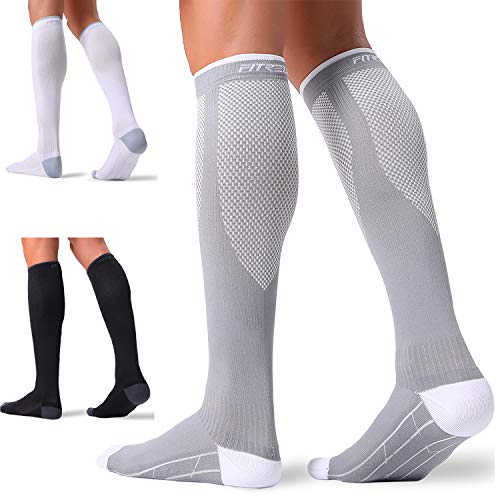
Best for all-day standing on hard floors. 15-20mmHg graduated compression with honeycomb cushioning in the heel and ball of foot — both compression benefit and impact absorption. Nurses and teachers consistently rate these best for shift work.
- Honeycomb cushioning reduces impact
- All-day comfort on hard floors
- High-quality construction
- Premium price for a sock

Not a full sock — an ankle sleeve with targeted compression and viscoelastic pads over the malleoli. Better for isolated ankle swelling and plantar fasciitis than a full sock because compression is most intense exactly where needed.
- Targeted compression where needed
- Viscoelastic pads reduce localized swelling
- Medical grade
- Fits under any sock
- Need to wear with a regular sock
- More expensive per use
The bottom line
For most people with foot pain, the Physix Gear at $18 is the move — the arch panel directly addresses plantar fasciitis and the 15-20mmHg level is safe for daily use. Athletes doing serious training should invest in CEP.
Diabetic patients: only use socks specifically designed for diabetic feet. The non-binding top is not optional — it's medically necessary for compromised circulation.
Want a personalized recommendation?
A podiatrist can fit you for the exact combination that matches your foot type and condition.